 Yonhap
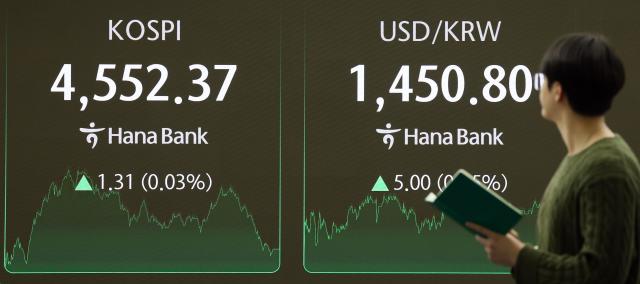
 SEOUL, January 14 (AJP) - A sharp rise in overseas securities investment by South Koreans led to nearly $20 billion in net foreign-exchange outflows last year, the Bank of Korea said in a report Wednesday, underscoring why the won weakened despite large current-account surpluses.
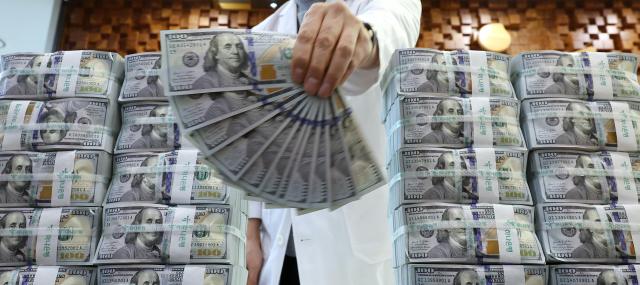
Net foreign-currency outflows linked to residents’ overseas securities purchases and overseas investment by pension funds totaled $19.6 billion from January through October last year.
The findings were presented by Kwon Yong-oh, head of the Bank of Korea’s international finance research team, at a policy symposium in Seoul.
Kwon said exchange-rate movements since the global financial crisis have been closely tied to shifts in foreign-exchange supply and demand. Prior to the 2020s, current-account surpluses typically exceeded demand created by residents’ overseas investment, resulting in an excess supply of foreign currency and a stronger won.
That dynamic has since changed, he said. Despite sustained current-account surpluses since 2024, the won has weakened rapidly. Kwon suggested that export-related dollar inflows may not be fully entering the market as some exporters delay currency conversion, while growing overseas investment by residents has tightened dollar supply and demand.
From January through October last year, South Korea’s current-account surplus generated $89.6 billion in net inflows, while foreign investors’ purchases of domestic securities added $31.9 billion, according to the central bank.
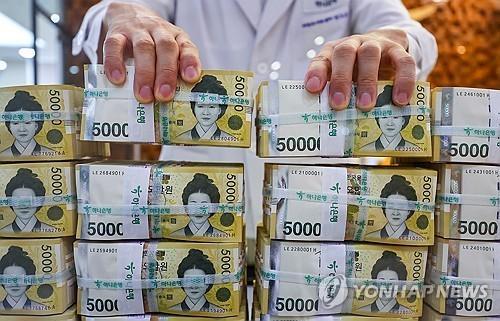
Those inflows were more than offset by a surge in residents’ overseas securities investment and overseas investment by the National Pension Service, resulting in a net foreign-exchange outflow of $19.6 billion, or roughly 29 trillion won at current exchange rates.
The outflow marked a sharp increase from the same period a year earlier, when net outflows totaled about $500 million. Residents’ overseas securities investment jumped to $117.1 billion from $71.0 billion a year earlier.
“Residents’ behavior is driving the shift in foreign-exchange supply and demand,” Kwon said.
Kwon also pointed to a widening growth gap between South Korea and the U.S., as well as differences in expected stock-market returns, as contributing factors to the won’s recent weakness.
Addressing claims that excessive liquidity expansion has weakened the won, Kwon said a long-term channel linking money-supply growth to higher inflation and currency depreciation is theoretically possible, but noted that empirical evidence remains inconclusive.
Jang Suna 기자 sunrise@ajunews.com
![[포토] 폭설에 밤 늦게까지 도로 마비](https://image.ajunews.com/content/image/2025/12/05/20251205000920610800.jpg)
![[포토] 국회 예결위 참석하는 김민석 총리](https://cphoto.asiae.co.kr/listimg_link.php?idx=2&no=2025110710410898931_1762479667.jpg)
![[포토] 예지원, 전통과 현대가 공존한 화보 공개](https://image.ajunews.com/content/image/2025/10/09/20251009182431778689.jpg)
![[포토] 알리익스프레스, 광군제 앞두고 팝업스토어 오픈](https://cphoto.asiae.co.kr/listimg_link.php?idx=2&no=2025110714160199219_1762492560.jpg)
![[포토]두산 안재석, 관중석 들썩이게 한 끝내기 2루타](https://file.sportsseoul.com/news/cms/2025/08/28/news-p.v1.20250828.1a1c4d0be7434f6b80434dced03368c0_P1.jpg)
![[작아진 호랑이③] 9위 추락 시 KBO 최초…승리의 여신 떠난 자리, KIA를 덮친 '우승 징크스'](http://www.sportsworldi.com/content/image/2025/09/04/20250904518238.jpg)
![블랙핑크 제니, 최강매력! [포토]](https://file.sportsseoul.com/news/cms/2025/09/05/news-p.v1.20250905.ed1b2684d2d64e359332640e38dac841_P1.jpg)
![[포토]첫 타석부터 안타 치는 LG 문성주](https://file.sportsseoul.com/news/cms/2025/09/02/news-p.v1.20250902.8962276ed11c468c90062ee85072fa38_P1.jpg)
![[포토] 아홉 '신나는 컴백 무대'](http://www.segye.com/content/image/2025/11/04/20251104514134.jpg)
![블랙핑크 제니, 매력이 넘쳐! [포토]](https://file.sportsseoul.com/news/cms/2025/09/05/news-p.v1.20250905.c5a971a36b494f9fb24aea8cccf6816f_P1.jpg)
![[포토] 박지현 '아름다운 미모'](http://www.segye.com/content/image/2025/11/19/20251119519369.jpg)
![[포토] 키스오브라이프 하늘 '완벽한 미모'](http://www.segye.com/content/image/2025/09/05/20250905504457.jpg)
![[포토] 박지현 '순백의 여신'](http://www.segye.com/content/image/2025/09/05/20250905507414.jpg)
![[포토] 김고은 '단발 여신'](http://www.segye.com/content/image/2025/09/05/20250905507236.jpg)
![[포토] 발표하는 김정수 삼양식품 부회장](https://image.ajunews.com/content/image/2025/11/03/20251103114206916880.jpg)
![[포토] 언론 현업단체, "시민피해구제 확대 찬성, 권력감시 약화 반대"](https://image.ajunews.com/content/image/2025/09/05/20250905123135571578.jpg)
![[포토] '삼양1963 런칭 쇼케이스'](https://image.ajunews.com/content/image/2025/11/03/20251103114008977281.jpg)
![[포토] 한샘, '플래그십 부산센텀' 리뉴얼 오픈](https://image.ajunews.com/content/image/2025/10/31/20251031142544910604.jpg)
![[포토]끝내기 안타의 기쁨을 만끽하는 두산 안재석](https://file.sportsseoul.com/news/cms/2025/08/28/news-p.v1.20250828.0df70b9fa54d4610990f1b34c08c6a63_P1.jpg)
![[포토] 김고은 '상연 생각에 눈물이 흘러'](http://www.segye.com/content/image/2025/09/05/20250905507613.jpg)
![[포토] 아이들 소연 '매력적인 눈빛'](http://www.segye.com/content/image/2025/09/12/20250912508492.jpg)
![[포토]두산 안재석, 연장 승부를 끝내는 2루타](https://file.sportsseoul.com/news/cms/2025/08/28/news-p.v1.20250828.b12bc405ed464d9db2c3d324c2491a1d_P1.jpg)
![[포토] 키스오브라이프 쥴리 '단발 여신'](http://www.segye.com/content/image/2025/09/05/20250905504358.jpg)