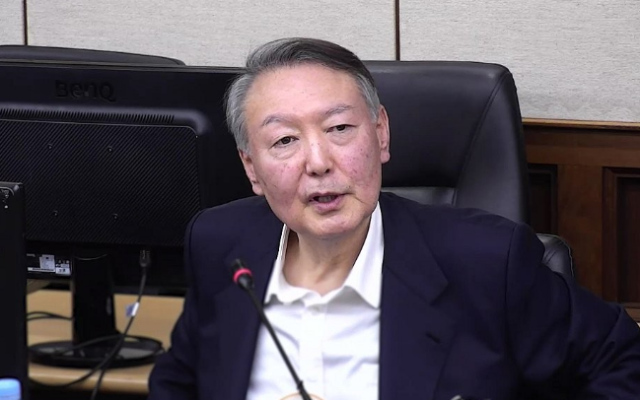
 Former President Yoon Suk Yeol speaks during his insurrection trial at the Seoul Central District Court in the capital in this Dec. 29, 2025, file photo provided by the court. (Yonhap)
SEOUL January 10 (AJP) -South Korea’s special prosecutor is expected to make a sentencing request for former President Yoon Suk Yeol on charges of leading an insurrection tied to his brief imposition of martial law in 2024, after a lower court on Friday postponed the final hearing following more than 15 hours of defense arguments that stretched to midnight.
The Seoul Central District Court’s Criminal Division 25, presided over by Judge Ji Gui-yeon, announced it would hold an additional session on Jan. 13 to hear the prosecution’s final statement and sentencing request, as well as Yoon’s closing defense.
Friday’s session, initially scheduled as the trial’s final hearing, overran significantly as defense teams continued reviewing documentary evidence and delivering closing arguments.
Lawyers for former Defense Minister Kim Yong-hyun, who spoke first, spent the bulk of the day examining case materials, delaying subsequent proceedings.
Kim’s defense argued that troops dispatched to the National Assembly and the National Election Commission did not commit insurrection or riot, saying soldiers neither restrained civilians nor exercised control, and followed “minimum unarmed and nonviolent principles.” The deployment, they said, was a routine security mission under a joint defense plan.
On allegations of intimidation, the defense said service pistols were kept unloaded, with magazines detached and ammunition stored separately under a double-lock system, calling the situation “far from” any use of force. They also argued that accompanying personnel inside election facilities was meant to protect operations, not to conduct surveillance or interrogation.
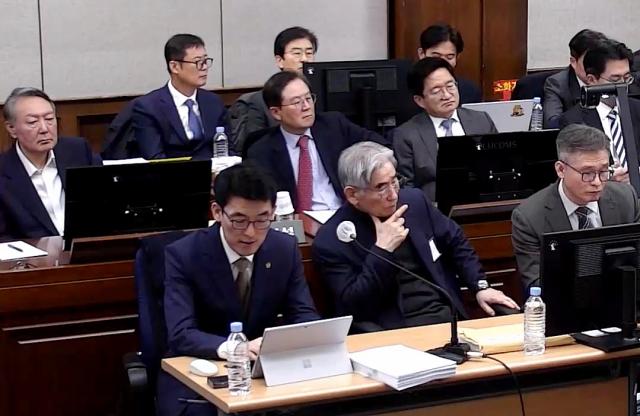 Former president Yoon Suk Yeol and 7 others accused of insurrection with their respective lawyers at what should have been the final hearing at the Seoul Central District Court in the capital on Jan. 9, 2026, which has been rescheduled for Jan. 13. after a pause at midnight. (Yonhap)
As proceedings dragged on, the court repeatedly raised concerns over fairness and feasibility. Judge Ji said it was “realistically difficult” to conclude arguments in a single day given the volume of materials, stressing the need to protect defendants’ rights while ensuring procedural efficiency.
With midnight approaching, the court decided to end the session after all defendants except Yoon completed their arguments, postponing Yoon’s final statement and the prosecution’s sentencing request to Jan. 13.
Yoon’s legal team objected to delivering key arguments late at night, citing the expanded scope of the case after recent amendments to the indictment.
The special prosecutor’s team, led by Cho Eun-suk, said it had prepared to conclude proceedings Friday but agreed to the delay, citing physical limits after the prolonged hearing.
Prosecutors have accused Yoon of masterminding an insurrection and could seek the death penalty or life imprisonment under South Korean law if he is found guilty. South Korea, however, has followed an unofficial moratorium for nearly three decades and has not carried out an execution since 1997.
During hearings, prosecutors alleged that Yoon and then Defense Minister Kim began devising a plan as early as October 2023 to suspend the National Assembly and seize legislative authority. They further alleged that Yoon sought to label political opponents — including then opposition leader Lee Jae Myung — as “anti-state forces” and detain them.
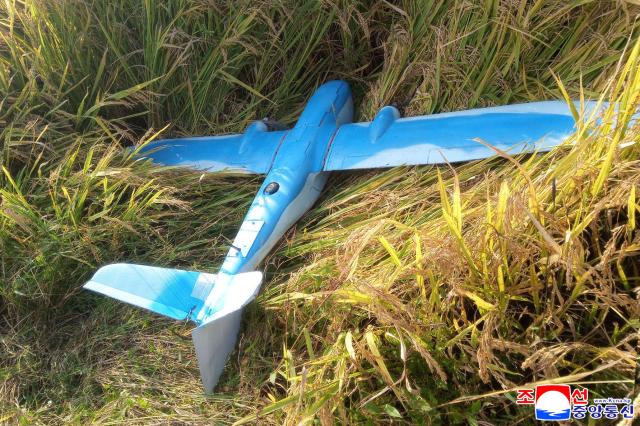
Prosecutors also claim the former president and Kim attempted to manufacture a pretext for declaring martial law by escalating tensions with North Korea through a covert drone operation, an allegation denied by the defense.
Although the attempted imposition of martial law lasted only about six hours before collapsing, the move shocked Asia’s fourth-largest economy and elsewhere in the world as Korea posed as a key U.S. security ally long regarded as one of the region’s most resilient democracies.
At the Jan. 13 hearing, the court plans to hear Yoon’s final defense, followed by the prosecution’s sentencing request, final statements from the defendants and the formal close of arguments. A verdict is widely expected in early February.
Park Yong-jun 기자 yjunsay@ajunews.com
![[포토] 폭설에 밤 늦게까지 도로 마비](https://image.ajunews.com/content/image/2025/12/05/20251205000920610800.jpg)
![[포토] 예지원, 전통과 현대가 공존한 화보 공개](https://image.ajunews.com/content/image/2025/10/09/20251009182431778689.jpg)
![[포토]두산 안재석, 관중석 들썩이게 한 끝내기 2루타](https://file.sportsseoul.com/news/cms/2025/08/28/news-p.v1.20250828.1a1c4d0be7434f6b80434dced03368c0_P1.jpg)
![[작아진 호랑이③] 9위 추락 시 KBO 최초…승리의 여신 떠난 자리, KIA를 덮친 '우승 징크스'](http://www.sportsworldi.com/content/image/2025/09/04/20250904518238.jpg)
![[포토]첫 타석부터 안타 치는 LG 문성주](https://file.sportsseoul.com/news/cms/2025/09/02/news-p.v1.20250902.8962276ed11c468c90062ee85072fa38_P1.jpg)
![블랙핑크 제니, 최강매력! [포토]](https://file.sportsseoul.com/news/cms/2025/09/05/news-p.v1.20250905.ed1b2684d2d64e359332640e38dac841_P1.jpg)
![블랙핑크 제니, 매력이 넘쳐! [포토]](https://file.sportsseoul.com/news/cms/2025/09/05/news-p.v1.20250905.c5a971a36b494f9fb24aea8cccf6816f_P1.jpg)
![[포토] 국회 예결위 참석하는 김민석 총리](https://cphoto.asiae.co.kr/listimg_link.php?idx=2&no=2025110710410898931_1762479667.jpg)
![[포토] 박지현 '아름다운 미모'](http://www.segye.com/content/image/2025/11/19/20251119519369.jpg)
![[포토] 김고은 '단발 여신'](http://www.segye.com/content/image/2025/09/05/20250905507236.jpg)
![[포토] 발표하는 김정수 삼양식품 부회장](https://image.ajunews.com/content/image/2025/11/03/20251103114206916880.jpg)
![[포토] 박지현 '순백의 여신'](http://www.segye.com/content/image/2025/09/05/20250905507414.jpg)
![[포토] 키스오브라이프 하늘 '완벽한 미모'](http://www.segye.com/content/image/2025/09/05/20250905504457.jpg)
![[포토] 알리익스프레스, 광군제 앞두고 팝업스토어 오픈](https://cphoto.asiae.co.kr/listimg_link.php?idx=2&no=2025110714160199219_1762492560.jpg)
![[포토] 언론 현업단체, "시민피해구제 확대 찬성, 권력감시 약화 반대"](https://image.ajunews.com/content/image/2025/09/05/20250905123135571578.jpg)
![[포토] '삼양1963 런칭 쇼케이스'](https://image.ajunews.com/content/image/2025/11/03/20251103114008977281.jpg)
![[포토] 김고은 '상연 생각에 눈물이 흘러'](http://www.segye.com/content/image/2025/09/05/20250905507613.jpg)
![[포토] 아이들 소연 '매력적인 눈빛'](http://www.segye.com/content/image/2025/09/12/20250912508492.jpg)
![[포토]끝내기 안타의 기쁨을 만끽하는 두산 안재석](https://file.sportsseoul.com/news/cms/2025/08/28/news-p.v1.20250828.0df70b9fa54d4610990f1b34c08c6a63_P1.jpg)
![[포토] 한샘, '플래그십 부산센텀' 리뉴얼 오픈](https://image.ajunews.com/content/image/2025/10/31/20251031142544910604.jpg)
![[포토]두산 안재석, 연장 승부를 끝내는 2루타](https://file.sportsseoul.com/news/cms/2025/08/28/news-p.v1.20250828.b12bc405ed464d9db2c3d324c2491a1d_P1.jpg)
![[포토] 키스오브라이프 쥴리 '단발 여신'](http://www.segye.com/content/image/2025/09/05/20250905504358.jpg)
![[포토] 아홉 '신나는 컴백 무대'](http://www.segye.com/content/image/2025/11/04/20251104514134.jpg)