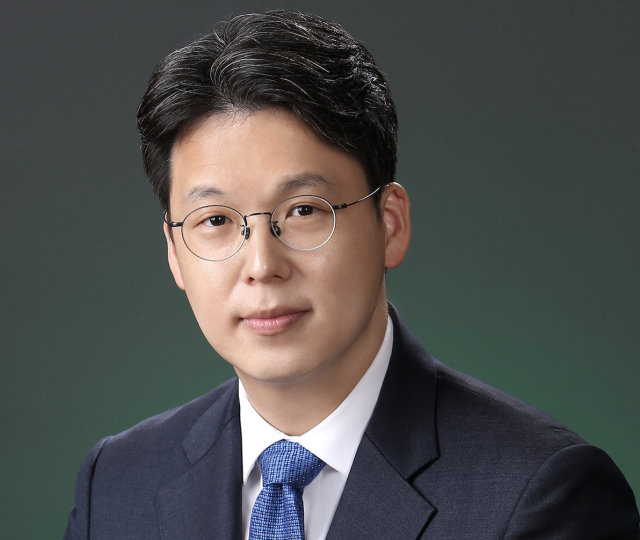
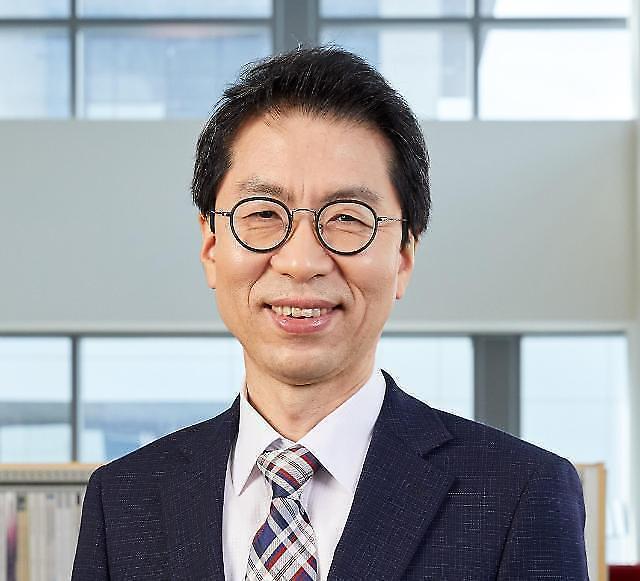
 [Sungchun Jung, senior research fellow, Korea Institute for International Economic Policy]
 Japan’s long-term interest rates have returned to levels unseen in decades, marking a structural shift for an economy long defined by near-zero borrowing costs. Yields on newly issued 10-year Japanese government bonds (JGBs) climbed into the 2% range in December 2025, the highest level in 26 years and 10 months, extending a steady rise that began in 2023.
The move has been broad-based. Two-year yields reached 1.12%, the highest since 1996; five-year yields hit 1.52%, the highest since 2008; and 20-year yields climbed to 3.02%, the highest since 1999. In an economy conditioned to ultra-low rates, interest is once again a price.
Why rates are rising
Monetary normalization is the first driver. Since 2024, the Bank of Japan has dismantled the pillars of its ultra-easy stance. It ended negative interest rates and yield-curve control in March 2024, began tapering bond purchases in July, and raised its policy rate in stages to 0.75% by December 2025. As the BOJ steps back from bond buying, market forces are reasserting themselves, and investors are demanding a term premium to compensate for uncertainty and fiscal risk.
Fiscal expansion is the second. The Takaichi government has leaned on stimulus rather than austerity, approving a large supplementary budget and a broader stimulus package funded heavily through new bond issuance. With the BOJ no longer acting as a dominant buyer, heavier supply is adding upward pressure on yields, while markets question whether cash-based support and utility subsidies address Japan’s longer-term growth constraints.
What it means
Rising long-term rates carry two messages.
First, they suggest Japan may finally be moving beyond deflation. Inflation has stayed above 2%, and wage gains are increasingly cited by policymakers as evidence of a nascent price-wage cycle. In that sense, higher yields reflect a healthier — if unfamiliar — macro environment.
Second, they introduce new risks. Higher yields raise debt-servicing costs for a heavily indebted government, lift corporate financing costs, and create valuation losses for financial institutions holding large JGB portfolios. For households, higher mortgage rates threaten to weigh on consumption and housing demand.
The policy dilemma ahead
The key argument is that Japan is no longer a demand-starved economy. With labor shortages and capacity constraints emerging, demand-heavy fiscal stimulus risks fueling prices rather than growth. The priority, the author argues, should shift toward supply-side reform — easing labor bottlenecks, lifting productivity, and fostering new industries — while financial institutions, companies, and households adapt to a world where interest rates once again matter.
Whether Japan can complete its transition to a “normal” interest-rate economy will depend on how effectively each sector adjusts to this long-awaited return of price signals.
About the author
▷Economics, Seoul National University ▷Ph.D. in economics, Hitotsubashi University ▷Vice president, Korea Institute for International Economic Policy
* This article, published by Aju Business Daily, was translated by AI and edited by AJP.
Jung Sung-chun 대외경제정책연구원 선임연구위원

![[포토] 폭설에 밤 늦게까지 도로 마비](https://image.ajunews.com/content/image/2025/12/05/20251205000920610800.jpg)

![[포토] 예지원, 전통과 현대가 공존한 화보 공개](https://image.ajunews.com/content/image/2025/10/09/20251009182431778689.jpg)

![[포토]두산 안재석, 관중석 들썩이게 한 끝내기 2루타](https://file.sportsseoul.com/news/cms/2025/08/28/news-p.v1.20250828.1a1c4d0be7434f6b80434dced03368c0_P1.jpg)
![블랙핑크 제니, 매력이 넘쳐! [포토]](https://file.sportsseoul.com/news/cms/2025/09/05/news-p.v1.20250905.c5a971a36b494f9fb24aea8cccf6816f_P1.jpg)
![[작아진 호랑이③] 9위 추락 시 KBO 최초…승리의 여신 떠난 자리, KIA를 덮친 '우승 징크스'](http://www.sportsworldi.com/content/image/2025/09/04/20250904518238.jpg)
![[포토] 국회 예결위 참석하는 김민석 총리](https://cphoto.asiae.co.kr/listimg_link.php?idx=2&no=2025110710410898931_1762479667.jpg)
![블랙핑크 제니, 최강매력! [포토]](https://file.sportsseoul.com/news/cms/2025/09/05/news-p.v1.20250905.ed1b2684d2d64e359332640e38dac841_P1.jpg)
![[포토]첫 타석부터 안타 치는 LG 문성주](https://file.sportsseoul.com/news/cms/2025/09/02/news-p.v1.20250902.8962276ed11c468c90062ee85072fa38_P1.jpg)
![[포토] 박지현 '아름다운 미모'](http://www.segye.com/content/image/2025/11/19/20251119519369.jpg)
![[포토] 발표하는 김정수 삼양식품 부회장](https://image.ajunews.com/content/image/2025/11/03/20251103114206916880.jpg)
![[포토] 키스오브라이프 하늘 '완벽한 미모'](http://www.segye.com/content/image/2025/09/05/20250905504457.jpg)

![[포토] 김고은 '단발 여신'](http://www.segye.com/content/image/2025/09/05/20250905507236.jpg)
![[포토] '삼양1963 런칭 쇼케이스'](https://image.ajunews.com/content/image/2025/11/03/20251103114008977281.jpg)
![[포토] 알리익스프레스, 광군제 앞두고 팝업스토어 오픈](https://cphoto.asiae.co.kr/listimg_link.php?idx=2&no=2025110714160199219_1762492560.jpg)
![[포토] 언론 현업단체, "시민피해구제 확대 찬성, 권력감시 약화 반대"](https://image.ajunews.com/content/image/2025/09/05/20250905123135571578.jpg)
![[포토] 박지현 '순백의 여신'](http://www.segye.com/content/image/2025/09/05/20250905507414.jpg)


![[포토]끝내기 안타의 기쁨을 만끽하는 두산 안재석](https://file.sportsseoul.com/news/cms/2025/08/28/news-p.v1.20250828.0df70b9fa54d4610990f1b34c08c6a63_P1.jpg)
![[포토] 한샘, '플래그십 부산센텀' 리뉴얼 오픈](https://image.ajunews.com/content/image/2025/10/31/20251031142544910604.jpg)
![[포토] 김고은 '상연 생각에 눈물이 흘러'](http://www.segye.com/content/image/2025/09/05/20250905507613.jpg)
![[포토] 아이들 소연 '매력적인 눈빛'](http://www.segye.com/content/image/2025/09/12/20250912508492.jpg)
![[포토]두산 안재석, 연장 승부를 끝내는 2루타](https://file.sportsseoul.com/news/cms/2025/08/28/news-p.v1.20250828.b12bc405ed464d9db2c3d324c2491a1d_P1.jpg)
![[포토] 키스오브라이프 쥴리 '단발 여신'](http://www.segye.com/content/image/2025/09/05/20250905504358.jpg)

![[포토] 아홉 '신나는 컴백 무대'](http://www.segye.com/content/image/2025/11/04/20251104514134.jpg)