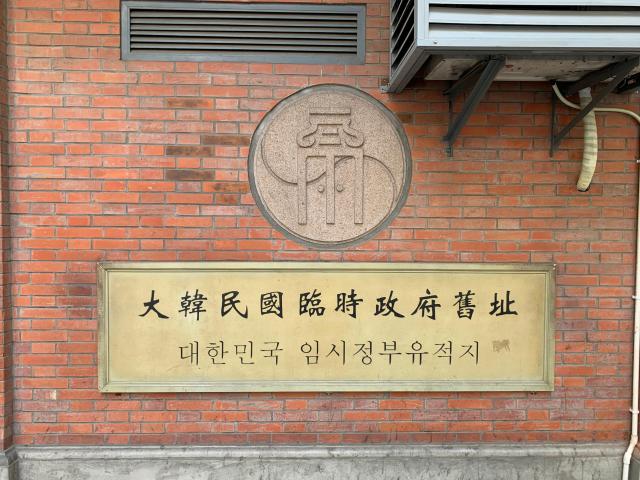
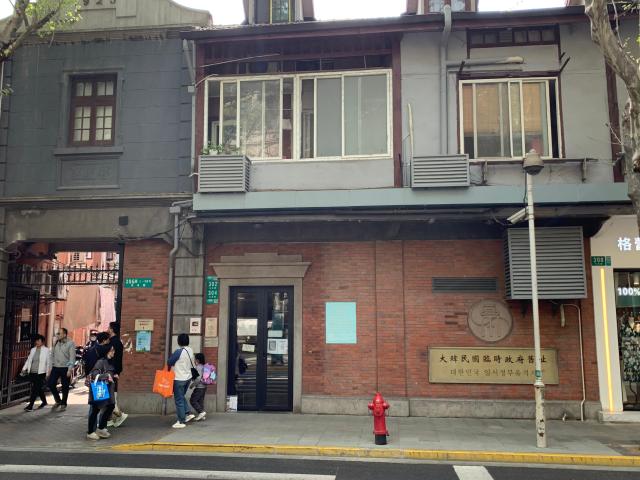
 Exterior view of South Korea’s Provisional Government building in Shanghai. [Photo provided by Hyundai Motor]
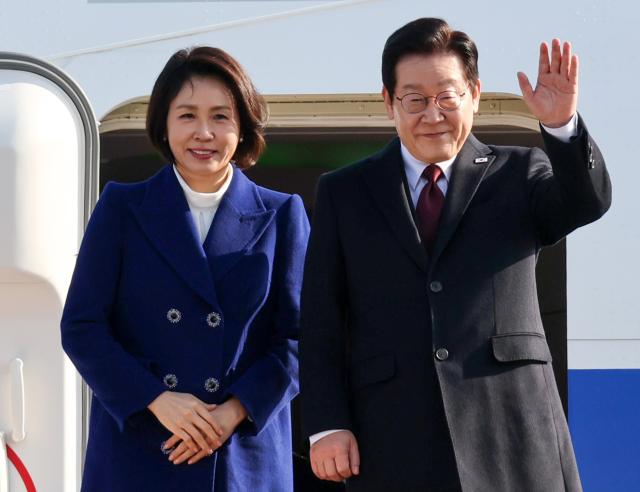
 SEOUL, January 04 (AJP) -As Lee Jae Myung embarked on the first state visit by a South Korean president to China in nine years, attention is turning to a little-known episode of corporate diplomacy that helped preserve one of Korea’s most important overseas historical sites — the former headquarters of the Republic of Korea Provisional Government in Shanghai.
At the center of that effort was the late Hyundai Motor Group chair Chung Mong-koo, whose direct engagement with Shanghai leaders two decades ago proved decisive in safeguarding the building amid a sweeping urban redevelopment drive.
In 2004, Shanghai was pressing ahead with a major redevelopment of the Luwan district ahead of the 2010 World Expo, planning to transform more than 46,000 square meters of aging neighborhoods into a commercial and entertainment hub.
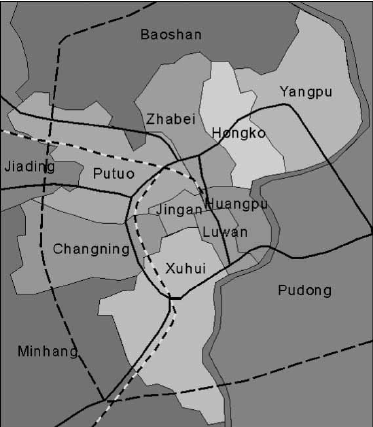 The location of Luwan district in central Shanghai
The provisional government building — a cornerstone of Korea’s modern statehood narrative — stood within the redevelopment zone.
Concerns mounted in South Korea that if the project were led by foreign developers, the historic site might not be fully protected. While Seoul requested preservation of the specific addresses housing the building, Shanghai officials maintained that excluding a small section from a large-scale redevelopment was impractical.
According to Hyundai Motor Group materials and government accounts, Chung met senior Shanghai officials at City Hall in May 2004, urging the city to allow South Korean companies to participate in the redevelopment so the site’s preservation could be guaranteed.
Chung described Shanghai as “an international city where a cutting-edge future and China’s former golden age coexist,” while stressing that the provisional government building was “a symbol of Korea’s spirit of independence and legitimacy,” carrying profound historical significance for South Koreans.
His outreach extended beyond a single meeting. Follow-up discussions with Shanghai’s urban development leadership linked economic cooperation with historical preservation, elevating the issue to intergovernmental consultations between Seoul and Shanghai.
The result was highly unusual. Despite an international open bid already having taken place, Shanghai put the redevelopment plan on hold, allowing the provisional government building to be preserved intact. Seoul officials at the time described the decision as a rare case of effective public–private coordination that conveyed the importance of the site to Chinese authorities.
The episode has since been cited as an early example of how South Korean companies, operating beyond formal diplomacy, helped protect national heritage abroad through long-term trust and engagement.President Lee Jae Myung’s China itinerary spans Beijing and Shanghai, combining political diplomacy with economic and innovation-focused engagements. In Shanghai, the president is scheduled to meet city leaders, attend a Korea–China venture and startup summit, and visit the former provisional government building — a symbolic stop that links contemporary diplomacy with shared historical memory.
The timing has drawn renewed attention to Chung’s role, particularly as Lee is accompanied by a 200-strong business delegation, the largest to travel with the president.
Among the delegates is Chung Euisun, the son of the late Chung Mong-koo and now chairman of Hyundai Motor Group. His participation underscores the continuity of Hyundai’s engagement with China across generations — from his father’s quiet intervention to preserve a historic site to the group’s current focus on electric vehicles, hydrogen and next-generation mobility cooperation.
Hyundai plans to uphold the legacy of the late Chung by stepping up preservation of overseas independence movement sites by assessing conditions and, when repairs are needed, pursuing preservation work in consultation with the veterans ministry and other agencies.
A Hyundai Motor Group official said remembering the sacrifice and dedication of independence patriots and passing those values to the next generation is meaningful, adding the group will continue to work closely with the veterans ministry using its people, resources and technology.
The company’s social contribution work in China has also drawn attention, including the “Hyundai Green Zone” project to combat desertification in Inner Mongolia, the “Dream Classroom” program supporting elementary schools in underserved areas, and hydrogen education through HTWO Guangzhou.
Hyundai said the Inner Mongolia project has run for 17 years in line with China’s 2060 carbon neutrality policy and local anti-desertification efforts. Launched in 2008 under Chung and continued under Chairman Chung Euisun, it is one of the group’s flagship initiatives in China.
Across three phases in Ulanqab, Inner Mongolia, Hyundai said it built an eco-friendly guesthouse village, created about 31,000 square meters of forest (including reed beds and waterside flower gardens), and carried out a 300-square-meter grassland restoration project. In August 2019, Chung visited Zhenglan Banner in Inner Mongolia, where the project was underway.
Since 2011, Hyundai said it has supported education at 96 elementary schools across 30 provinces in China through Dream Classroom, providing a cumulative 10.5 million yuan in equipment and scholarships. Since 2023, it has offered hydrogen-related education and science museum experience programs through HTWO Guangzhou, its local hydrogen fuel cell system production unit.
Hyundai said these efforts helped it rank No. 1 for 10 consecutive years among automakers in the Chinese Academy of Social Sciences’ corporate social responsibility development index. As of 2025, it ranked third among all companies in China for the fifth straight year and second among foreign companies.
Han Ji-yeon 기자 hanji@ajunews.com
![[포토] 폭설에 밤 늦게까지 도로 마비](https://image.ajunews.com/content/image/2025/12/05/20251205000920610800.jpg)
![[포토] 예지원, 전통과 현대가 공존한 화보 공개](https://image.ajunews.com/content/image/2025/10/09/20251009182431778689.jpg)
![[포토]두산 안재석, 관중석 들썩이게 한 끝내기 2루타](https://file.sportsseoul.com/news/cms/2025/08/28/news-p.v1.20250828.1a1c4d0be7434f6b80434dced03368c0_P1.jpg)
![블랙핑크 제니, 매력이 넘쳐! [포토]](https://file.sportsseoul.com/news/cms/2025/09/05/news-p.v1.20250905.c5a971a36b494f9fb24aea8cccf6816f_P1.jpg)
![[작아진 호랑이③] 9위 추락 시 KBO 최초…승리의 여신 떠난 자리, KIA를 덮친 '우승 징크스'](http://www.sportsworldi.com/content/image/2025/09/04/20250904518238.jpg)
![블랙핑크 제니, 최강매력! [포토]](https://file.sportsseoul.com/news/cms/2025/09/05/news-p.v1.20250905.ed1b2684d2d64e359332640e38dac841_P1.jpg)
![[포토] 박지현 '아름다운 미모'](http://www.segye.com/content/image/2025/11/19/20251119519369.jpg)
![[포토]첫 타석부터 안타 치는 LG 문성주](https://file.sportsseoul.com/news/cms/2025/09/02/news-p.v1.20250902.8962276ed11c468c90062ee85072fa38_P1.jpg)
![[포토] 국회 예결위 참석하는 김민석 총리](https://cphoto.asiae.co.kr/listimg_link.php?idx=2&no=2025110710410898931_1762479667.jpg)
![[포토] 키스오브라이프 하늘 '완벽한 미모'](http://www.segye.com/content/image/2025/09/05/20250905504457.jpg)
![[포토] 김고은 '단발 여신'](http://www.segye.com/content/image/2025/09/05/20250905507236.jpg)
![[포토] 발표하는 김정수 삼양식품 부회장](https://image.ajunews.com/content/image/2025/11/03/20251103114206916880.jpg)
![[포토] '삼양1963 런칭 쇼케이스'](https://image.ajunews.com/content/image/2025/11/03/20251103114008977281.jpg)
![[포토] 박지현 '순백의 여신'](http://www.segye.com/content/image/2025/09/05/20250905507414.jpg)
![[포토] 알리익스프레스, 광군제 앞두고 팝업스토어 오픈](https://cphoto.asiae.co.kr/listimg_link.php?idx=2&no=2025110714160199219_1762492560.jpg)
![[포토] 언론 현업단체, "시민피해구제 확대 찬성, 권력감시 약화 반대"](https://image.ajunews.com/content/image/2025/09/05/20250905123135571578.jpg)
![[포토] 아이들 소연 '매력적인 눈빛'](http://www.segye.com/content/image/2025/09/12/20250912508492.jpg)
![[포토]끝내기 안타의 기쁨을 만끽하는 두산 안재석](https://file.sportsseoul.com/news/cms/2025/08/28/news-p.v1.20250828.0df70b9fa54d4610990f1b34c08c6a63_P1.jpg)
![[포토] 한샘, '플래그십 부산센텀' 리뉴얼 오픈](https://image.ajunews.com/content/image/2025/10/31/20251031142544910604.jpg)
![[포토] 김고은 '상연 생각에 눈물이 흘러'](http://www.segye.com/content/image/2025/09/05/20250905507613.jpg)
![[포토]두산 안재석, 연장 승부를 끝내는 2루타](https://file.sportsseoul.com/news/cms/2025/08/28/news-p.v1.20250828.b12bc405ed464d9db2c3d324c2491a1d_P1.jpg)
![[포토] 키스오브라이프 쥴리 '단발 여신'](http://www.segye.com/content/image/2025/09/05/20250905504358.jpg)
![[포토] 아홉 '신나는 컴백 무대'](http://www.segye.com/content/image/2025/11/04/20251104514134.jpg)